Text size
Line height
Text spacing
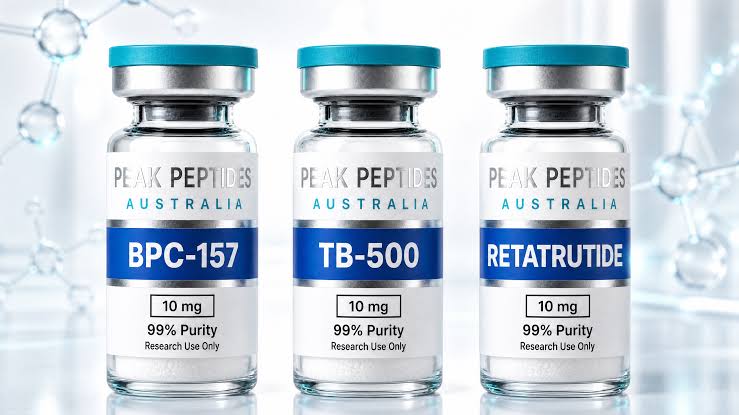
Peptides have become an increasingly discussed subject in biotechnology, pharmaceutical research, skincare, and biological science. As interest continues to grow, many Australians are searching online for clear information about peptide-related products, their applications, and the standards that matter when evaluating them. If you are researching peptides online Australia, understanding peptide science, product quality, and Australian regulations is an important starting point.
Peptides are short chains of amino acids that perform different functions in biological systems. Some occur naturally in the body, while others are developed for scientific research or specific medical applications. Although peptide research has contributed to important developments in medicine, not every peptide product has been proven safe or effective for every purpose.
By understanding the differences between research materials, cosmetic ingredients, and medicines, readers can evaluate information more carefully and make informed decisions.
Peptides are molecules made of amino acids connected by chemical bonds. Amino acids are also the building blocks of proteins, although peptides generally contain shorter chains.
The sequence of amino acids influences a peptide's structure and biological activity. Naturally occurring peptides participate in processes such as cell communication and hormonal signalling. Scientists also investigate synthetic peptides to understand biological pathways and explore possible applications in biotechnology and medicine.
Some peptide-based medicines are approved for specific medical conditions. Other compounds remain experimental and require further investigation. A compound studied in a laboratory should not automatically be considered an established treatment.
Understanding this distinction is essential when researching peptide-related products online. Product descriptions, scientific evidence, and intended uses should all be considered before drawing conclusions about a particular compound.
Online resources make scientific information easier to access. People searching for peptides online Australia may want to learn about biotechnology, laboratory research, cosmetic ingredients, or approved peptide-based medicines.
However, the information available online varies in quality. Scientific publications and official regulatory resources provide different types of evidence from promotional articles or customer testimonials.
It is also important to distinguish between different product categories. A peptide used in a cosmetic formulation is not equivalent to an injectable medicine, and a laboratory research compound is not necessarily suitable for human use.
Readers should begin by identifying the intended purpose of a product. This helps them understand which standards, documentation, and regulatory requirements may apply.
Researchers study peptides because some can interact with specific biological targets. This has supported the development of medicines for particular conditions.
Approved peptide-based medicines have undergone the applicable regulatory assessment for their authorised uses. Experimental compounds, by contrast, may lack sufficient evidence to establish their safety and effectiveness in humans.
Peptides are used in various areas of molecular biology and biochemistry. Scientists may investigate them to understand protein interactions, study cellular processes, and explore biological mechanisms.
In these settings, accurate identification and suitable analytical documentation are important. Differences in composition or purity may influence experimental results and make studies harder to reproduce.
Some cosmetic formulations contain peptide ingredients intended for particular skincare applications. Their effects depend on the specific ingredient, formulation, concentration, and available scientific evidence.
A cosmetic product should not be assumed to treat a medical condition simply because it contains a peptide. Claims about its benefits should be assessed carefully.
When exploring peptides online Australia, reviewing product information carefully is an important step.
1. Check the compound's identity. Look for a clearly stated name and relevant specifications. Vague descriptions or missing ingredient information make independent assessment difficult.
2. Review available documentation. For legitimate laboratory research materials, batch-specific documentation may help establish whether a product meets defined specifications.
3. Understand analytical testing. High-performance liquid chromatography (HPLC) can help assess chromatographic purity, while mass spectrometry can provide information about molecular mass and identity. The appropriate methods depend on the material and the intended research.
4. Examine certificates of analysis. A Certificate of Analysis (CoA) may provide test results for a particular batch. Review the batch identification, methods, results, and laboratory details rather than relying on a purity percentage alone.
5. Be cautious about exaggerated claims. Promises of guaranteed results, dramatic physical changes, or cures for serious conditions should be treated carefully when credible supporting evidence is absent.
A laboratory report does not independently prove that a product is sterile, safe, effective, or suitable for human use. Each form of documentation has specific purposes and limitations.
Australian regulations are important when researching peptide-related products online. The Therapeutic Goods Administration (TGA) regulates therapeutic goods, including many peptide-based medicines.
Therapeutic goods generally need to be included in the Australian Register of Therapeutic Goods (ARTG) before they can be imported, supplied, or advertised, unless an applicable exemption, approval, or other lawful authority applies.
Requirements depend on the product, its intended purpose, and the circumstances of its supply. Some peptide products advertised online have not been assessed by the TGA for safety, quality, and effectiveness.
A product's availability on a website does not automatically mean it is approved for medical use. Likewise, labelling a compound “research use only” does not automatically make every importation or supply arrangement lawful.
Before purchasing or importing a peptide-related product, check the current Australian requirements that apply to its category. Businesses and researchers may need qualified regulatory advice to understand their obligations.
If you are considering a peptide for a medical condition, consult a registered healthcare professional about appropriate treatment options. Do not use experimental or unapproved products as substitutes for established medical care.
Peptide stability varies depending on the compound, formulation, packaging, and environmental conditions. Some materials may be affected by moisture, light, temperature, or unsuitable handling.
For laboratory research, follow product-specific documentation and established laboratory procedures. Appropriate labelling, inventory records, and controlled handling can help maintain sample integrity.
There is no universal storage method suitable for every peptide. Researchers should rely on relevant information about the specific material rather than general assumptions.
Laboratory handling guidance also does not establish that a research compound is safe for consumption or injection. Products intended for human use require appropriate evidence, quality controls, and regulatory status.
When reviewing websites such as Peak Haven, focus on verifiable information rather than promotional claims alone.
Begin by examining the available business information, product descriptions, documentation, and relevant policies. Look for clear explanations of product specifications and a way to ask questions about the information provided.
Next, consider whether the product's stated purpose is consistent with its regulatory status. For therapeutic goods, consult official TGA resources rather than relying exclusively on supplier statements.
Be cautious of websites promising guaranteed health improvements or claiming that experimental compounds treat serious conditions without credible evidence.
A professional-looking website, attractive price, or positive customer review cannot independently establish product quality or safety.
Several common mistakes can make online research less reliable.
First, do not assume that online availability means regulatory approval. Second, avoid relying exclusively on social media recommendations or testimonials. Third, do not confuse laboratory research materials with approved medicines. Finally, do not assume that a product described as high-purity is automatically safe for human use.
Taking time to verify information is more useful than making a quick decision based on marketing language. When health is involved, qualified medical guidance is especially important.
Searching for peptides online Australia can lead to a wide range of scientific resources and product information. However, peptide-related products differ in their intended uses, quality requirements, supporting evidence, and regulatory status.
A responsible approach involves understanding the science, reviewing relevant documentation, checking Australian requirements, and avoiding unsupported health claims.
Whether researching peptide science or reviewing a supplier such as Peak Haven, prioritise transparency, credible evidence, and compliance with applicable regulations. Careful research supports informed decisions while helping readers recognise the limitations and potential risks associated with peptide-related products.
