As part of the National Child Traumatic Stress Network (NCTSN), the Learning Center for Child and Adolescent Trauma offers Free Online Education with:
- 300+ FREE CE certificates
- 50+ speakers
- 200+ online webinars
- 90,000+ members

Choosing the right equipment is one of the most important decisions for a mattress manufacturer planning to enter or expand pocket spring production. A suitable machine can directly affect production capacity, labor costs, material consumption, product quality, and long-term operating efficiency. Before investing in a new pocket spring machine, manufacturers should carefully evaluate several key factors to ensure the equipment matches their production requirements and future business plans.
Kimkoo Mattress Machinery has more than 18 years of experience in the development and manufacturing of mattress production equipment. As a professional mattress machinery supplier, Kimkoo provides high-speed pocket spring manufacturing equipment, assembly systems, and complete production solutions for mattress and sofa manufacturers worldwide.
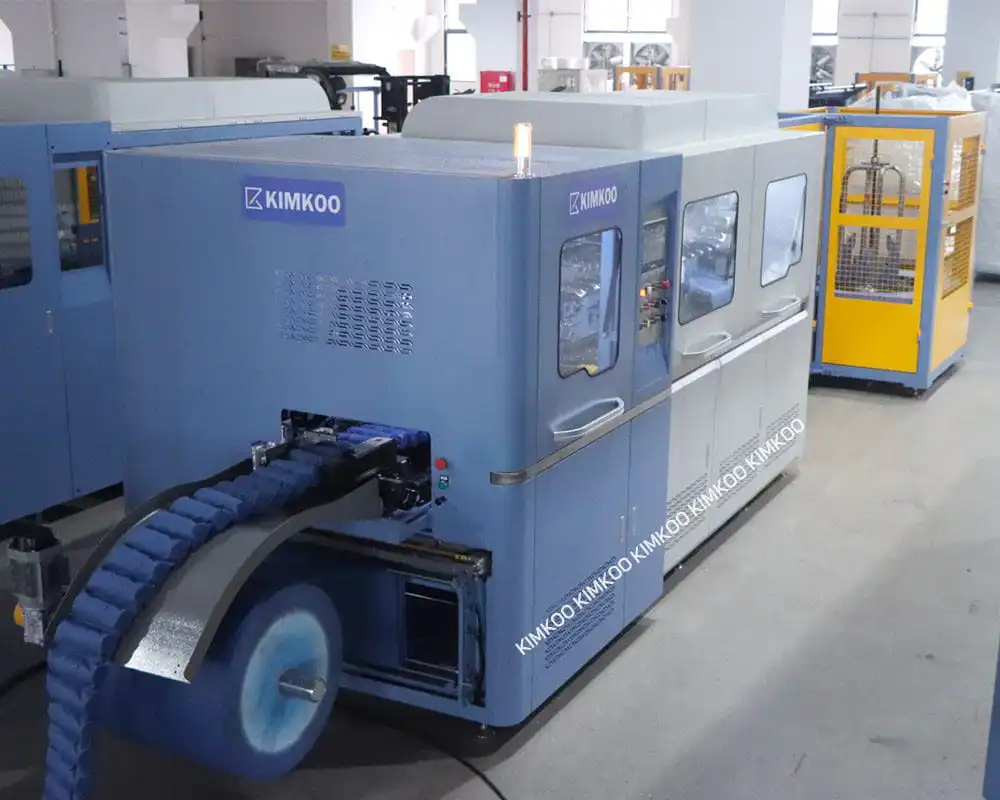
The first factor to consider is production capacity. Before purchasing equipment, manufacturers should estimate their current production requirements as well as expected future demand. Choosing a machine with insufficient output can create production bottlenecks, while purchasing significantly more capacity than required may increase the initial investment unnecessarily.
For large-scale mattress factories, high-speed CNC equipment can provide a significant productivity advantage. For example, Kimkoo's JK-PS-160 pocket spring machine can produce up to 160 springs per minute, making it suitable for high-volume mattress and sofa manufacturing.
The machine integrates wire feeding, heat treatment, spring coiling, fabric feeding, ultrasonic welding, and cutting into one automated workflow. This allows manufacturers to maintain continuous production with minimal manual intervention.
The level of automation is another important consideration. Modern mattress factories are increasingly looking for equipment that can reduce manual operations while maintaining stable production quality.
A fully automated pocket spring system can automatically control wire feeding, spring forming, fabric handling, welding, counting, and output management. PLC control and servo-driven systems also allow operators to adjust production parameters directly through a touchscreen interface.
High automation can significantly reduce labor requirements. Kimkoo's automated equipment is designed so that one operator can monitor multiple machines simultaneously, allowing manufacturers to increase output without proportionally increasing their workforce.
Not every mattress manufacturer produces the same type of spring unit. Some factories focus on standard pocket spring mattresses, while others require ergonomic zoning, different spring heights, or multiple wire diameters.
When evaluating a pocket coil machine, manufacturers should check which spring shapes and configurations it supports. Kimkoo's equipment can produce both cylindrical and drum-type pocket springs for different mattress and sofa applications.
The optional dual-wire configuration also provides greater flexibility for zoned mattress production. Two different wire diameters can be loaded simultaneously, allowing manufacturers to produce softer and firmer springs within the same production process.
For example, thicker wire can be used for firmer support areas while thinner wire can be used for softer zones. Spring sequences can be programmed through the touchscreen control system without requiring mechanical modifications.
Material consumption has a direct impact on the cost of every mattress produced. When selecting machinery, manufacturers should therefore evaluate not only production speed but also how efficiently the machine uses steel wire, non-woven fabric, and adhesive.
Kimkoo's JK-PS-160 uses a high compression ratio mechanism that allows manufacturers to produce springs with greater free height and wider coil pitch before compression. This design can enable the use of thinner wire while maintaining the required support characteristics, potentially reducing steel consumption without sacrificing mattress performance.
The machine also incorporates automated fabric feeding and ultrasonic welding technology. Accurate fabric handling helps minimize waste, while ultrasonic sealing provides clean and reliable pocket seams with low noise and consistent bonding quality.
These technologies are particularly important for high-volume manufacturers because even small reductions in material consumption can create significant savings over long production cycles.
A pocket spring coiling machine should not be evaluated as an isolated piece of equipment. Manufacturers should also consider how easily it can be integrated with downstream assembly equipment.
A pocket spring assembly machine can connect with pocket spring manufacturing equipment to transform individual spring rows into complete mattress spring units. This creates a more continuous manufacturing workflow and reduces manual material handling between production stages.
Kimkoo offers different assembly configurations for manufacturers with different production requirements. Semi-automatic assembly systems can be suitable for factories that need a practical and economical solution, while higher-capacity automatic systems can be connected to multiple spring manufacturing machines for large-scale production.
Before making a final purchasing decision, mattress manufacturers should evaluate the following points:
Selecting machinery from an experienced manufacturer can make the installation and long-term operation of a production line much easier. Kimkoo Mattress Machinery has more than 18 years of experience in mattress machinery manufacturing and provides equipment designed for stable, continuous industrial production.
Kimkoo's pocket spring solutions combine digital CNC coiling technology, servo control, automated fabric handling, ultrasonic welding, intelligent fault detection, and flexible production configurations. These technologies help manufacturers improve productivity while maintaining consistent spring quality and efficient material usage.
Buying a pocket spring machine is a long-term investment, so manufacturers should look beyond the initial purchase price. Production capacity, automation, spring flexibility, material efficiency, and compatibility with assembly equipment all have a major impact on the total value of the machinery.
By carefully evaluating these five factors before purchasing, mattress manufacturers can select equipment that matches their current production requirements while leaving room for future expansion. With the right combination of spring manufacturing and assembly equipment, factories can build a more efficient and reliable pocket spring production system.